
Passing the Colorado driver’s permit test is not about luck. It is about preparation, consistency, and knowing how to stay calm when the pressure kicks in. The students who do best usually are not the ones who cram the hardest the night before. They are the ones who study in a structured way, practice the right material, and walk into the test knowing what to expect.
Why Good Study Habits Matter
The permit test is designed to check whether a new driver understands the rules of the road, recognizes safe driving behavior, and can make sound decisions. That means memorizing random facts is not enough. Students need to understand concepts, recognize patterns, and avoid common mistakes.
Good study habits help students:
remember information longer
reduce stress before the test
improve confidence
avoid careless errors
build real driving knowledge, not just test knowledge
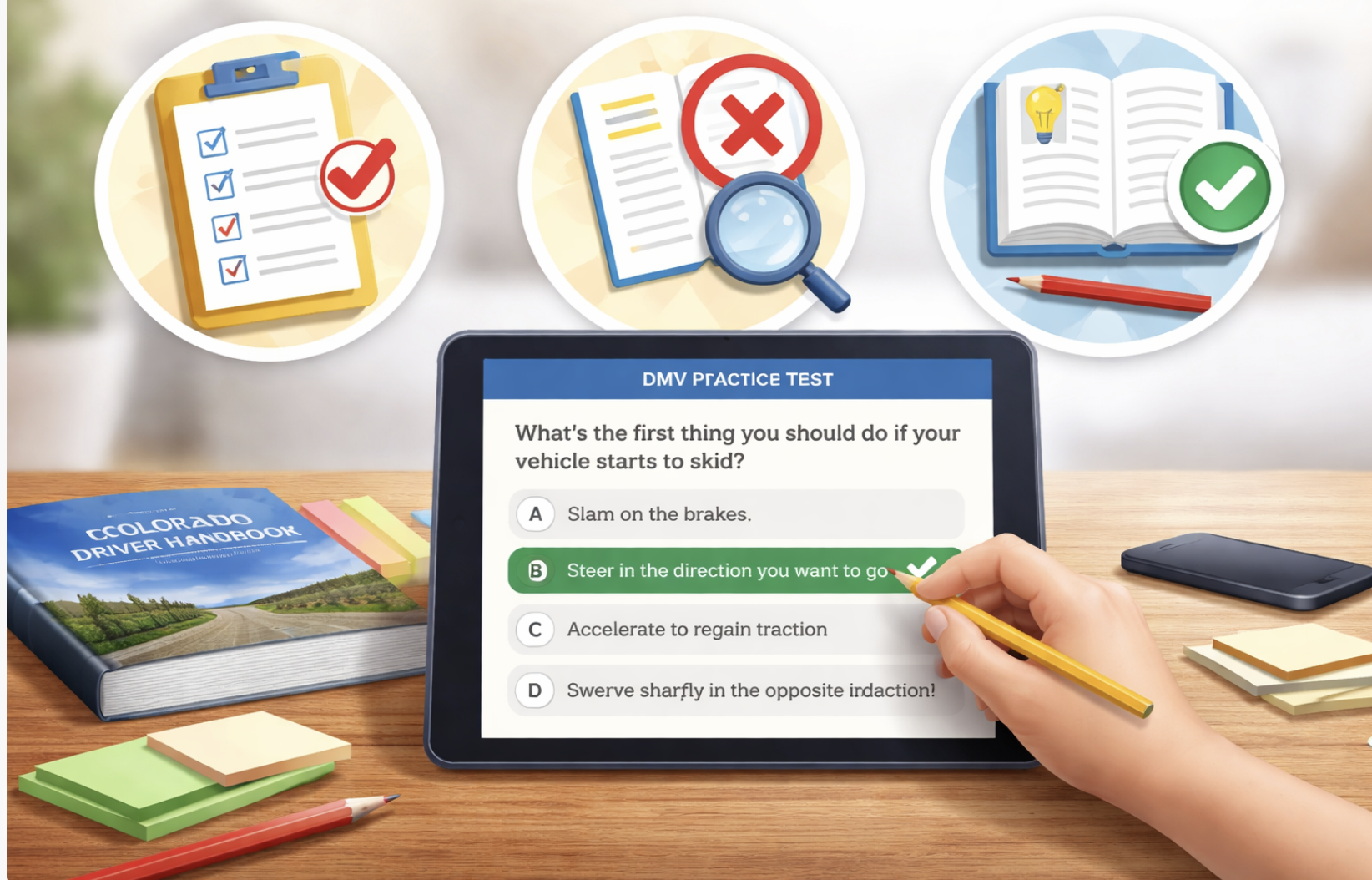
Best Practices for Using Practice Tests
1. Take practice quizzes in a realistic setting
Try to answer questions without distractions. Put the phone away, turn off notifications, and treat the quiz like it matters. This helps students get used to focusing under test-like conditions.
2. Do not guess and move on too quickly
If a question feels tricky, slow down and read every word. Many test mistakes happen because students rush, miss one keyword, or answer what they think the question says instead of what it actually says.
3. Pay attention to patterns in missed questions
If a student keeps missing questions about road signs, right-of-way, penalties, or alcohol laws, that is a signal. They should spend extra time in that area instead of just repeating questions they already know.
4. Retake practice tests after review
Do not just keep taking quizzes cold and hoping the score magically improves. Review first, then test again. The goal is improvement with understanding, not just repetition.
Test-Taking Best Practices
1. Get a good night’s sleep
A tired brain makes avoidable mistakes. Sleep affects memory, focus, and decision-making. Studying late into the night usually helps less than students think.
2. Eat something and stay hydrated
Students do better when they are alert and steady. Going into the test hungry, dehydrated, or overloaded with caffeine can hurt concentration.
3. Arrive calm and prepared
Before the test, students should know where they are going, what they need to bring, and what time they need to be there. Last-minute chaos is a great way to start the test flustered.
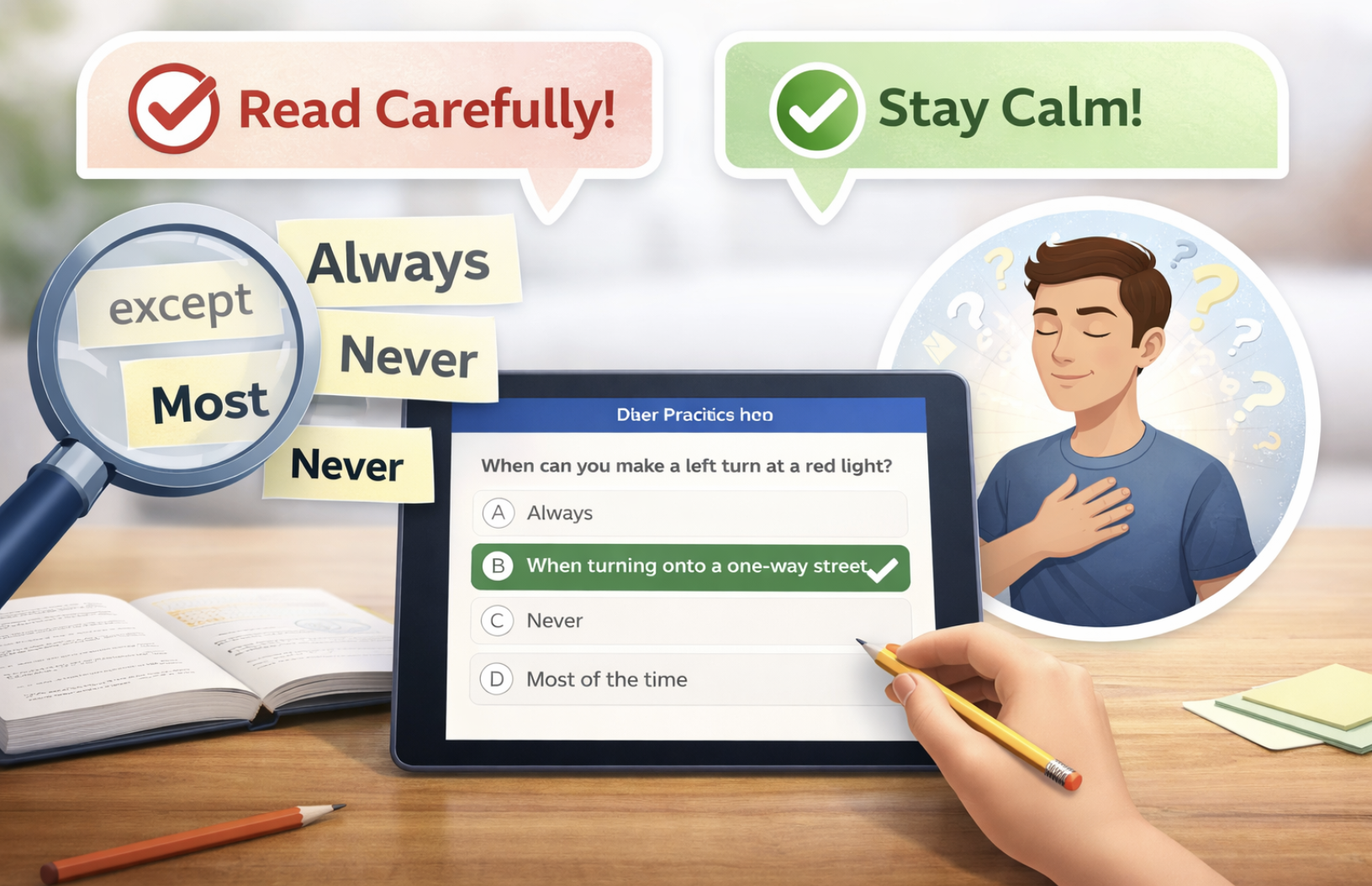
4. Read each question carefully
This is one of the biggest separators between passing and failing. Students should read the whole question, then read all answer choices before selecting one.
Words like always, never, except, and most matter.
5. Do not panic over one hard question
Every student runs into a question that feels unfamiliar. That does not mean the whole test is going badly. Stay calm, use logic, and move forward.
6. Trust preparation, not emotion
Students often know more than they think. Second-guessing every answer can create problems that were not there in the first place. If they have studied well and read carefully, confidence matters.
Best Practices for Studying
1. Study in short, focused sessions
Do not try to power through everything in one sitting. Students usually retain more when they study in shorter blocks of time.
A strong approach is to study for 20 to 30 minutes at a time, then take a short break. One or two focused sessions each day is usually better than a long cram session once a week.
2. Use active practice, not just reading
Reading the handbook matters, but reading alone is often not enough. The best way to prepare is to answer questions, review explanations, and learn why an answer is right or wrong.
Active practice helps students recognize how questions are worded and builds better recall under pressure.
3. Study a little every day
Consistency beats intensity. Even 15 to 20 minutes a day can make a major difference over time. The more often a student sees the material, the more familiar it becomes.
4. Review mistakes carefully
Getting a question wrong is not failure. It is useful feedback. Students should pay close attention to missed questions and review the explanation. That is where the real learning happens.
A good rule is this: if you miss it once, study it. If you miss it twice, write it down and review it again later.
5. Focus on understanding, not memorizing
Students are more likely to succeed when they understand the reason behind the rule. For example, instead of memorizing a fact about stopping distance or right-of-way, they should understand what the rule is trying to prevent.
That kind of learning sticks better and helps on both the test and the road.
Get Your Custom Study Plan Here
A Simple Study Plan That Works
Here is a practical approach students can follow:
Step 1: Read a section of the Colorado driver handbook
Step 2: Take a short practice quiz on that topic
Step 3: Review all missed questions and explanations
Step 4: Repeat the next day
Step 5: Take a longer mixed quiz once or twice a week
This method keeps study sessions manageable while steadily building confidence.
Common Mistakes Students Make
Many students struggle because they:
cram at the last minute
rely only on reading instead of practicing
rush through questions
ignore explanations after missing questions
study inconsistently
focus too much on memorization and not enough on understanding
The good news is that all of these mistakes are fixable.
Advice for Parents
Parents can play a big role in helping students prepare well. The goal is not to add pressure. The goal is to create structure and consistency.
Helpful ways parents can support students include:
setting a regular study schedule
encouraging short daily practice sessions
asking students what they are missing most often
helping them stay calm and confident
treating preparation like a skill-building process, not just a one-time test
Passing the permit test starts with smart preparation. Study consistently. Practice actively. Learn from mistakes. Slow down and read carefully. Students who follow that process give themselves a much better chance to pass and become safer, more confident drivers.